Light Emerging from Darkness: A Journey of Mineral, Ink, and Time

I. The Ritual of Time
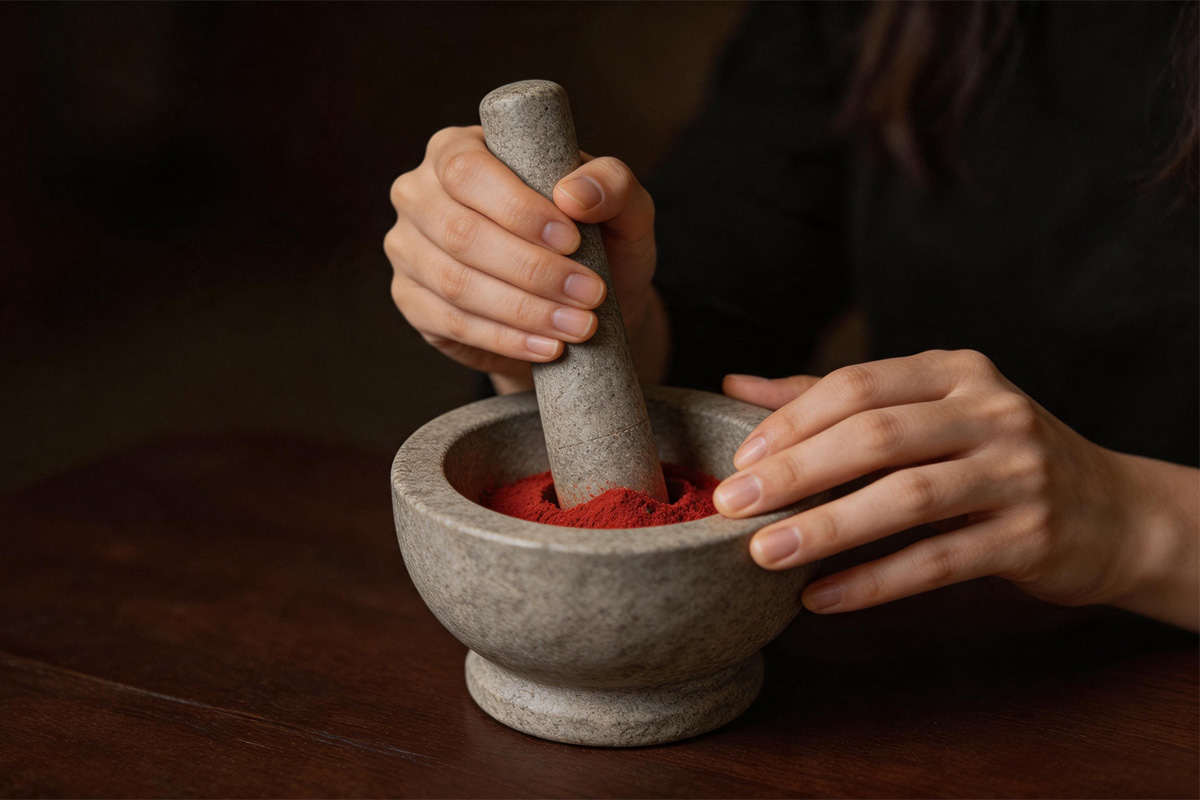
In a corner of my studio, there is a distinct scent—the smell of bovine collagen awakening in warm water. It is not a fragrance, but a primal, earthy aroma. Every morning, as I push open the studio door, I inhale this warm air thick with the scent of pigments and glue. For me, this scent marks the beginning of a ritual.
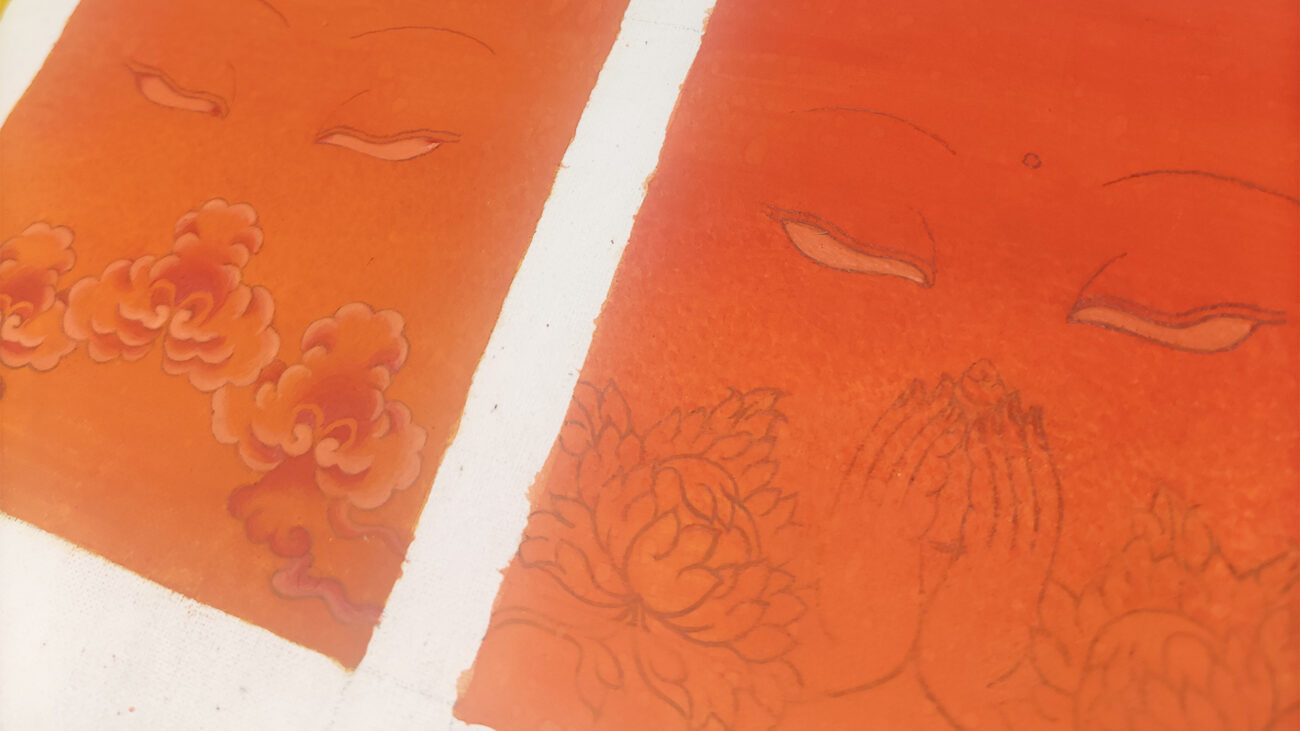
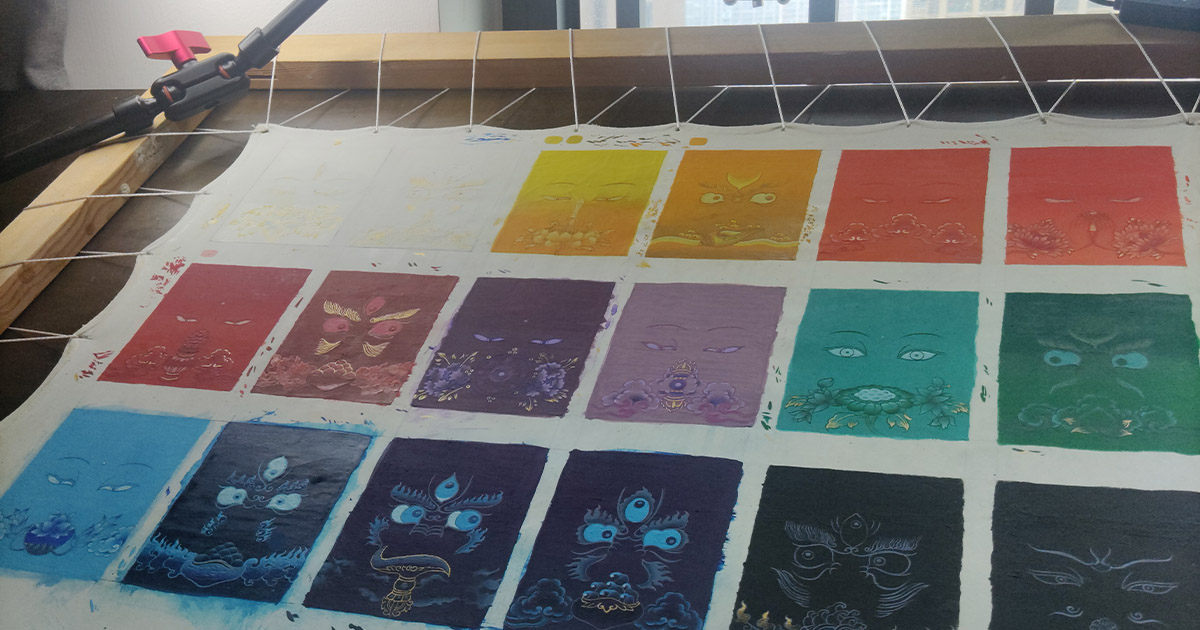
I take powders ground from minerals—the azurite blue, malachite green, and the warm ochre of hematite—and slowly blend them with the warm liquid glue. The pestle meets the mortar with a low, steady rhythmic friction. This process cannot be rushed; preparing a single color requires at least thirty minutes of patience. Too much glue makes it heavy; too much water makes it thin. This is the art of “slowing down.”
My teacher once told me: “Some colors need time to ‘ferment.’ Do not be troubled if they change slightly on paper. As long as it remains on the paper, it is a manifestation of time itself.” This scent may not be sweet, but its raw honesty is grounding. It serves as a reminder: the colors you see are not products of an industrial assembly line. They are the fragments of ancient rocks, the condensation of bone glue, and the physical transformation of time itself under the steady motion of my wrist.
II. The Vanishing Script
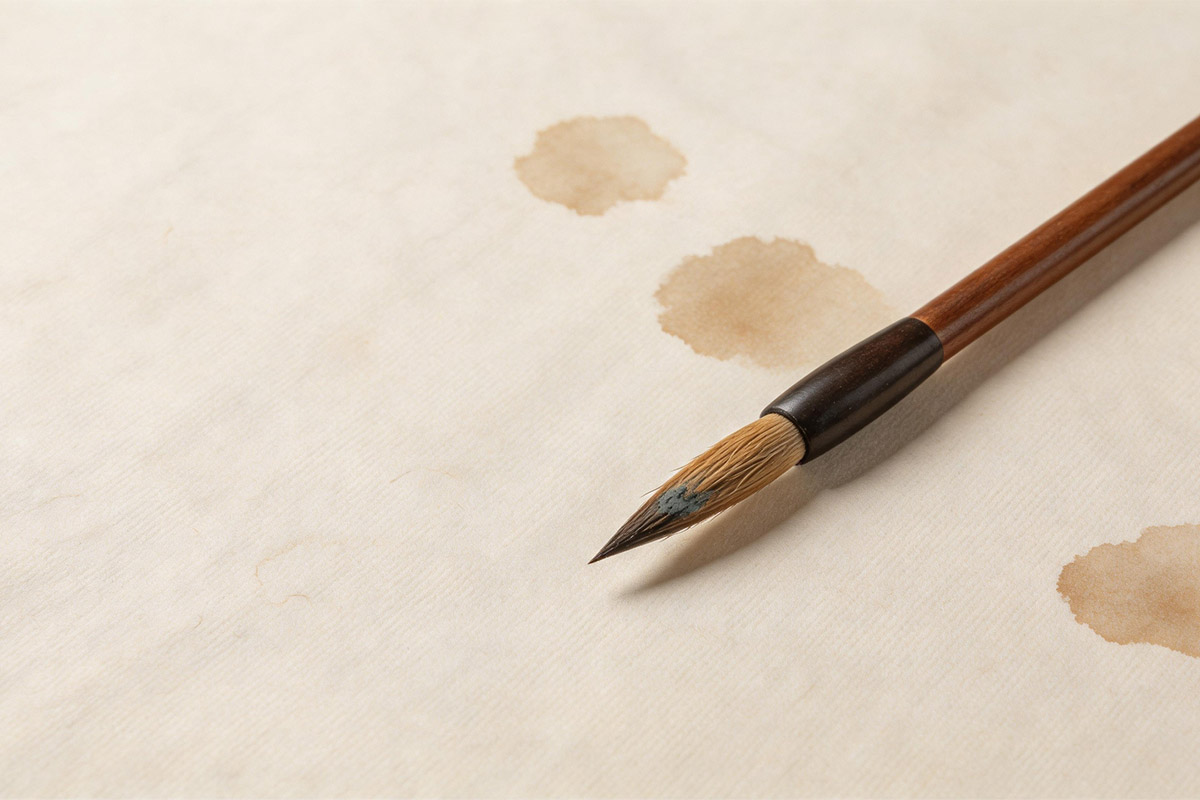
My childhood unfolded under the vast skies of Hohhot. I was a child who loved to draw from the moment I could hold a brush. However, due to tradition, my father insisted that “calligraphy and painting share the same root” and required me to study the art of the brush. Every day at five p.m., I had to set aside my homework and practice calligraphy on a gray-black “water-writing cloth” using only a brush and clear water.
As the brush stroked the cloth, the water turned into dark ink-like characters. Then, in the dry northern air, they would quietly evaporate, leaving no trace. I used to be annoyed by this, feeling it was a futile labor. Once, I intentionally knocked over my water cup, watching an entire page of calligraphy blur and disappear in a sudden “flood.” My father turned to look at me; he did not scold me. He simply replaced the cloth and refilled my cup with clear water.
“When the water dries, the words vanish.” At the time, I felt writing was a sentence of toil destined to be erased. Today, sitting in my own studio, I truly understand my father’s silent intention. That hour he gave me was not meant to produce immortal masterpieces, but to plant a seed of reverence for the “line” itself—its flow, its rhythm, and its quiet power. I eventually became the best calligrapher in my class. That vanishing water carved my very first perception of the brush.
III. The Glimmer of Dazhao Temple
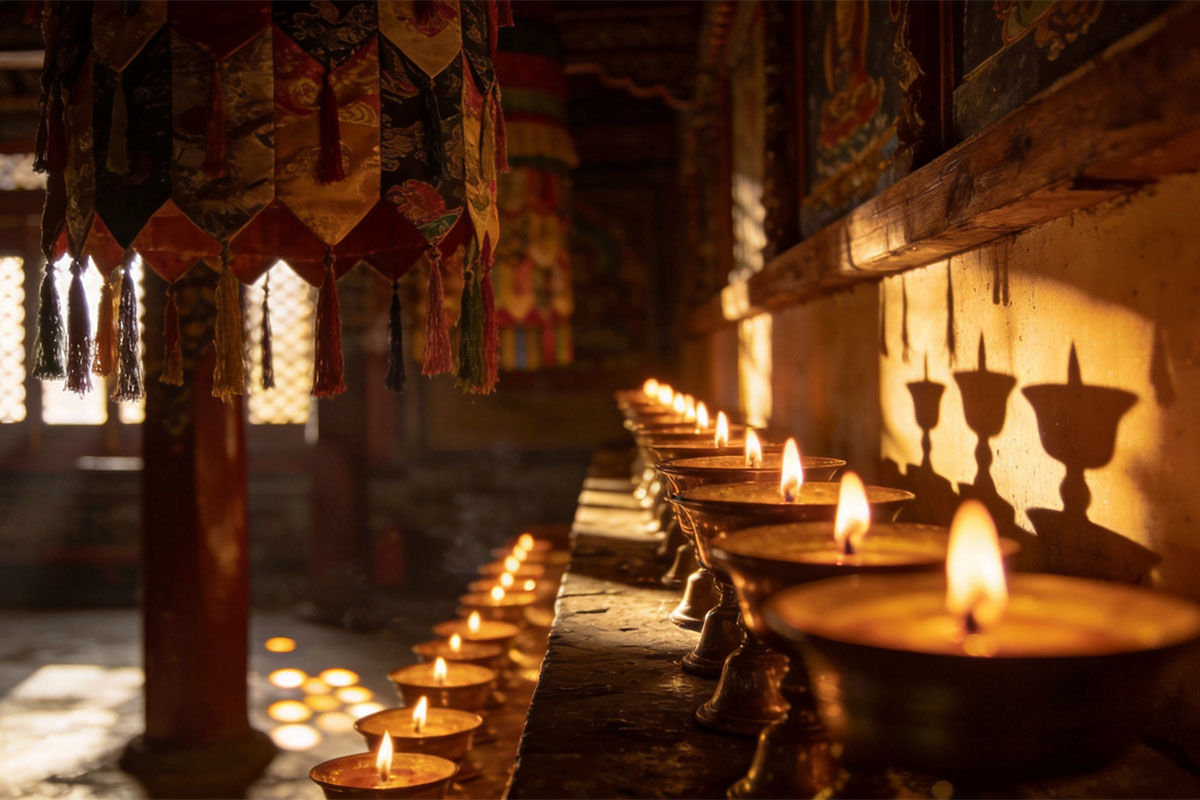
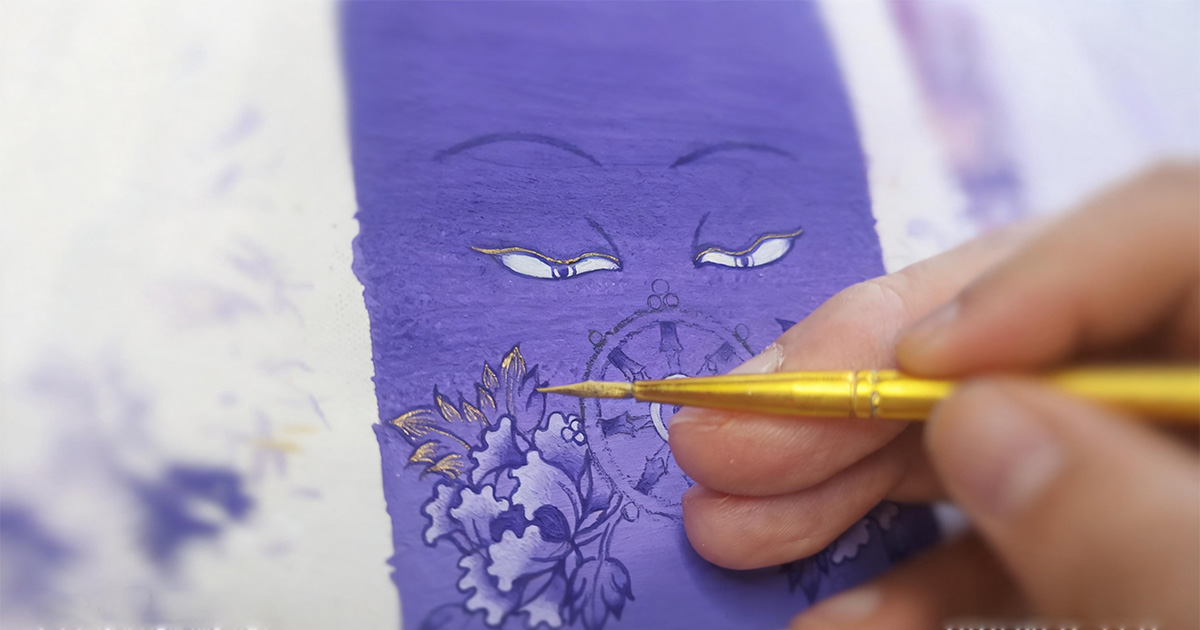
My quietest childhood memories belong to the Dazhao Temple in the old city. I remember being very small, looking up at the vast, mottled Thangkas hanging high in the dim halls. The glow of butter lamps flickered, illuminating the dust motes drifting in the air and tracing the blurred outlines of Buddhist robes on the murals. I would strain my eyes, rubbing them to see more clearly, but for a child, it remained a realm of inexplicable attraction and ultimate mystery.
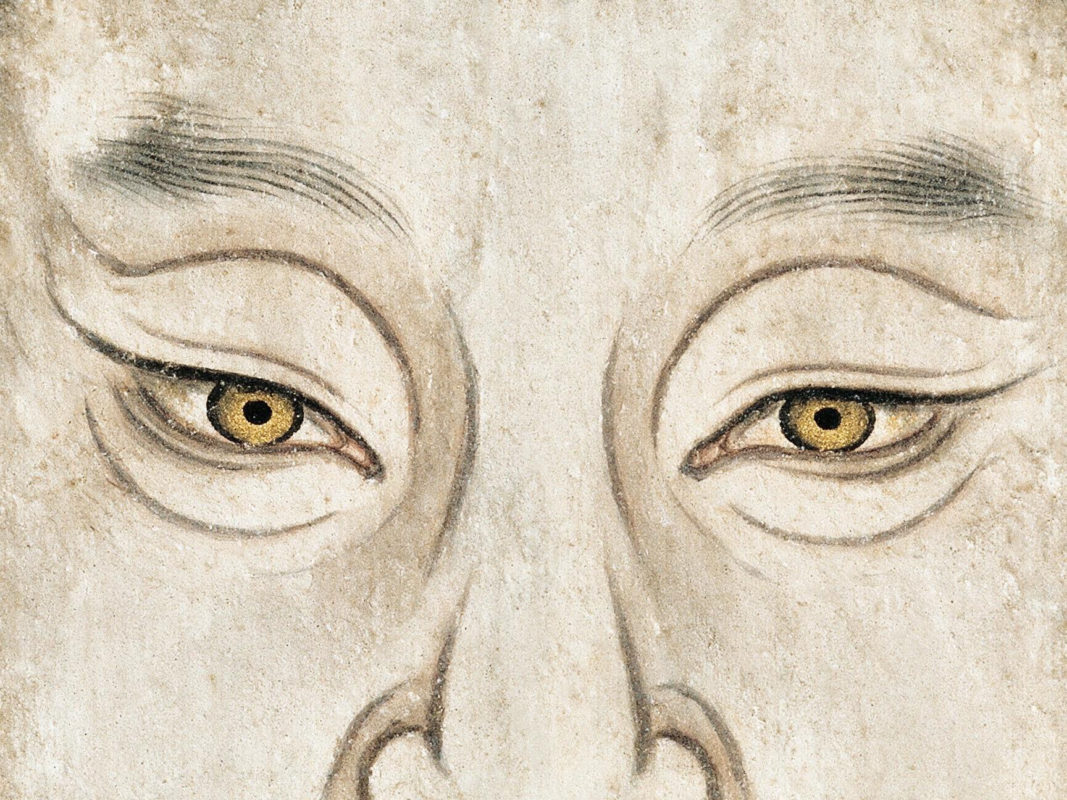
The air was heavy with the scent of aged butter and incense. Monks in crimson robes chanted in low, humming voices, punctuated by the rhythmic clanging of ritual instruments. It made my heart settle into a deep peace. Those brilliant mineral colors—vermilion red, malachite green, flickering gold leaf—seemed to be in a state of half-dreaming sleep amidst years of smoke and shadows. They were beautiful but distant, hanging in the unreachable darkness like a dream I yearned to touch.
Standing in that vast silence and gloom, I first understood that “beauty” itself sometimes needs to be protected within the shadows.
IV. The Magic of Light
Years later, when I graduated from the Chinese Painting Department of the Central Academy of Fine Arts and began my journey as a practitioner of traditional art, that perspective from Dazhao Temple never left me.
I am acutely aware that in China’s countless ancient temples and caves, the most precious murals sleep in strictly controlled darkness. Light is the enemy of color, yet it is also the origin of life. This is an eternal conflict: we preserve beauty by sealing it in the dark, but this very darkness creates a barrier between that beauty and the modern gaze.
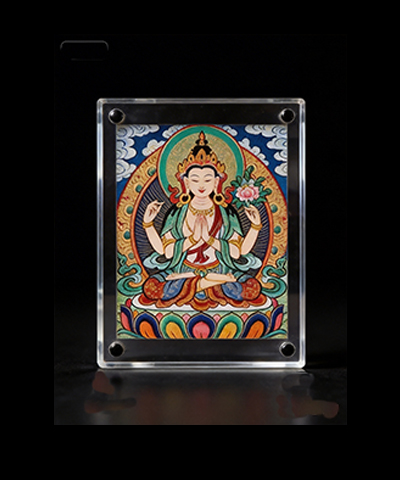
Thus, the idea of the “Paper Lightbox” emerged like a glimmer of hope. If I cannot bring people into that protected darkness, why not let the colors from that darkness carry their ancient memories toward the light?
When the lamp is lit, light is no longer an external invader; it emerges from within the colors, penetrating through them. The ancient paintings are bathed in a warm, living glow. This is more than an object. It is a bridge—connecting the protection of darkness with the hope of light, and the solemnity of ancient murals with the warmth of a modern desk. When light filters through these classical images, the past and present engage in a quiet dialogue.
V. My Promise
This is my story. I am a painter who grew up in the north, carrying my father’s teachings, the incense of temples, and a deep obsession with mineral colors.
My work is to listen to the language of stones and use slow time to transform them into light and shadow that can be contemplated. What I offer you is not a common decoration. It is a fragment of visual memory and the weight of time—a “translucent light.”
Welcome to my studio. Here, colors endure grinding and waiting, only to emerge in the darkness as a quiet and eternal glimmer for you.
About the Artist
A graduate of the Central Academy of Fine Arts, I focus on traditional Chinese art. My work seeks to find a quiet, luminous sanctuary between ancient Eastern materials and modern visual experiences.