Chinese Calligraphy as a Daily Contemplative Practice

Chinese calligraphy is often introduced as a form of writing or a traditional art. But for me, it begins somewhere quieter.
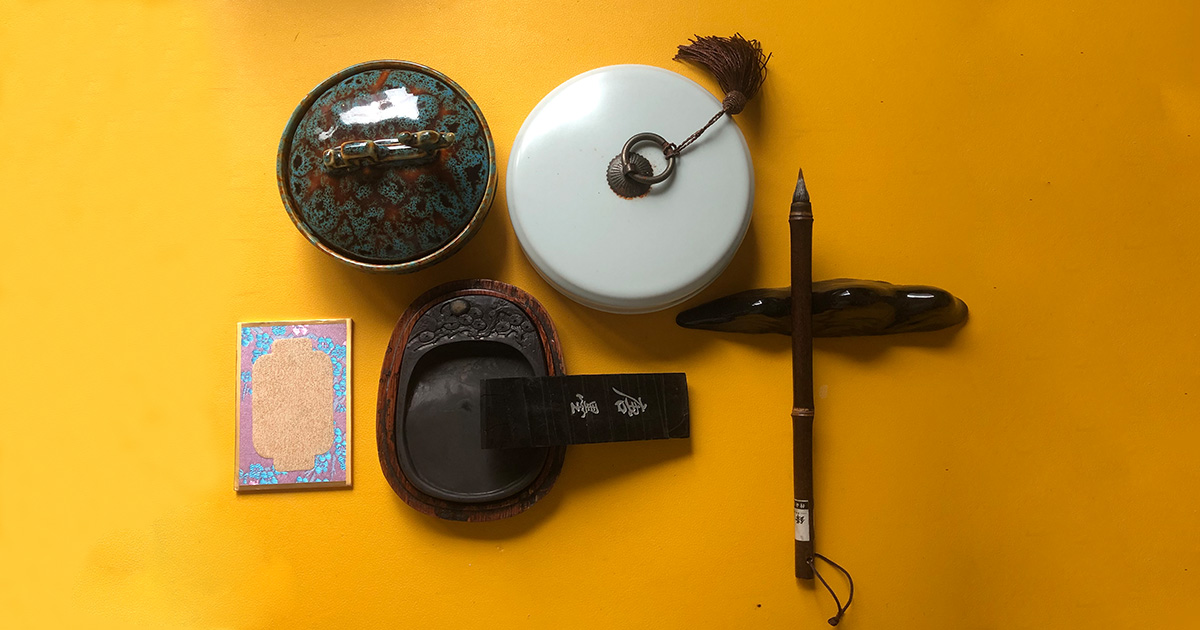
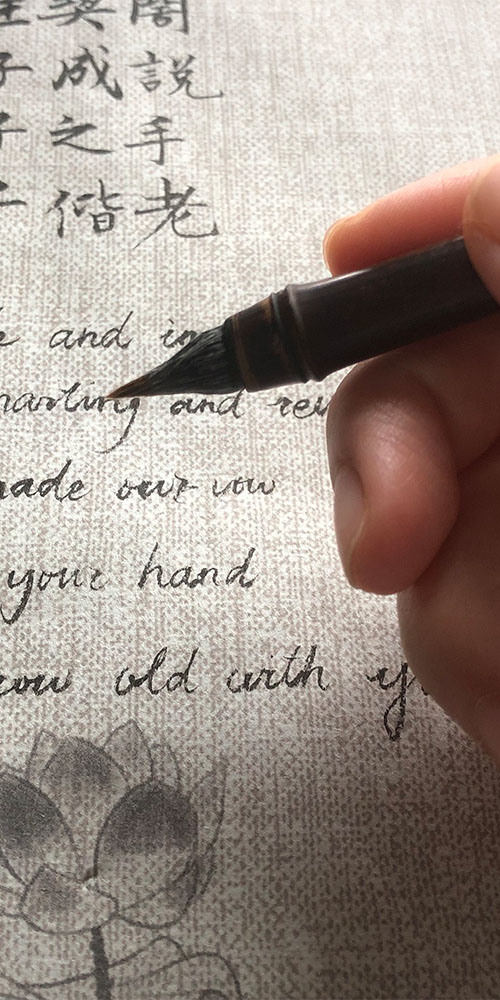
It begins with the movement of the brush.
Before a character appears on paper, there is a pause. The brush is held, ink is gathered, the hand moves, pressure changes, and a single stroke begins. The character is shaped through a sequence of physical decisions — not only what to write, but how to move.
This is one reason I see Chinese calligraphy as more than the finished character. It can also be a way of paying attention to movement, rhythm, breath, and the present moment.
That does not mean every act of calligraphy needs to become a formal meditation practice. For me, it is simply a contemplative way of working: slowing down enough to notice what the hand is doing, and allowing the character to emerge through that process.
Chinese Calligraphy Is Made Through Movement, Breath, and Rhythm
Chinese calligraphy is not created by assembling a character one small piece at a time in the way we might construct a digital graphic. Each stroke carries movement.
The brush may move quickly or slowly. It may begin with pressure and then become lighter. A stroke can turn sharply, pause briefly, or extend with a long, deliberate movement.
These physical qualities remain visible in the finished character.
That is why two people can write the same Chinese character and produce two completely different works.
The written meaning may be identical, but the movement is not.
When I write, I pay attention to this relationship between the hand and the brush. The rhythm of breathing naturally becomes part of the rhythm of writing. A pause before a stroke, the release of pressure, the direction of the brush, and the space left between strokes all contribute to the final form.
The character is therefore not only a symbol of language. It also records a moment of movement.
A Chinese Character Can Carry a State of Mind
A single Chinese character can contain a surprisingly large amount of visual and cultural meaning.
Words such as 静 (stillness), 安 (peace or ease), 和 (harmony), 知 (knowing or understanding), and 行 (to move or journey) can be read as words, but they can also be approached as visual forms.
This is particularly important to the way I create my calligraphy artworks.
I am interested in the space around a character as much as the character itself. A single word can occupy a large area of paper, surrounded by empty space. The seal may be small. The ink may be restrained. Nothing needs to fill every corner.
The character becomes an object of attention.
For example, 静 can suggest stillness. 行 can suggest movement or a journey. 知己, meaning a kindred spirit or a person who truly understands you, carries a more personal sense of connection.
These interpretations are not fixed rules. They are cultural and artistic associations, and each viewer may experience the same character differently.
That openness is part of what I value in Chinese calligraphy.
Why the Brush Stroke Matters as Much as the Meaning
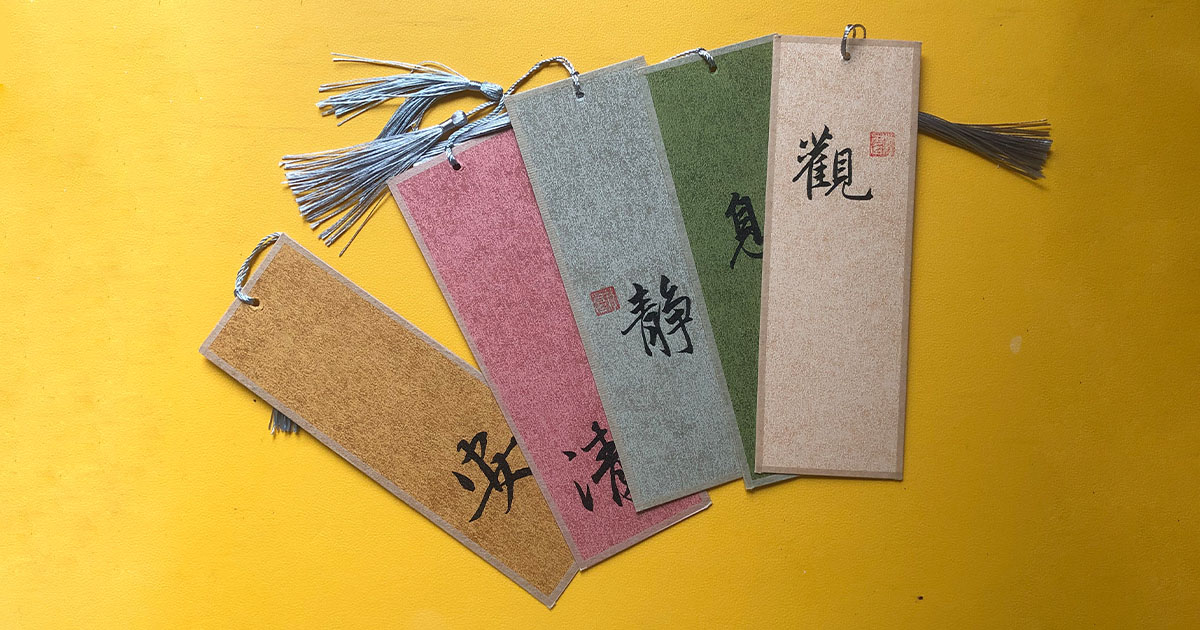
The visual character of Chinese calligraphy comes not only from the words being written, but from the way the brush moves.
This is what I mean when I sometimes describe the “energy” of a brush stroke.
I do not mean a supernatural force or something that can be measured or guaranteed. I mean the visible vitality created by movement: pressure, speed, direction, rhythm, ink density, and the relationship between solid marks and empty space.
A strong stroke can feel decisive.
A lighter stroke can feel quiet.
A long flowing movement can create a sense of openness.
A compact structure can feel more contained.
These qualities are part of the visual language of calligraphy.
For this reason, I do not want my calligraphy products to become simple translations of Chinese words into decorative graphics. I want the character itself — its structure, brushwork, paper, ink, and surrounding space — to remain part of the artwork.
Why I Bring Calligraphy into Everyday Objects
A traditional calligraphy work is usually experienced on a wall, on paper, or within a formal artistic setting.
But a small character does not necessarily need a large wall.
Sometimes it can accompany a person through an ordinary day.
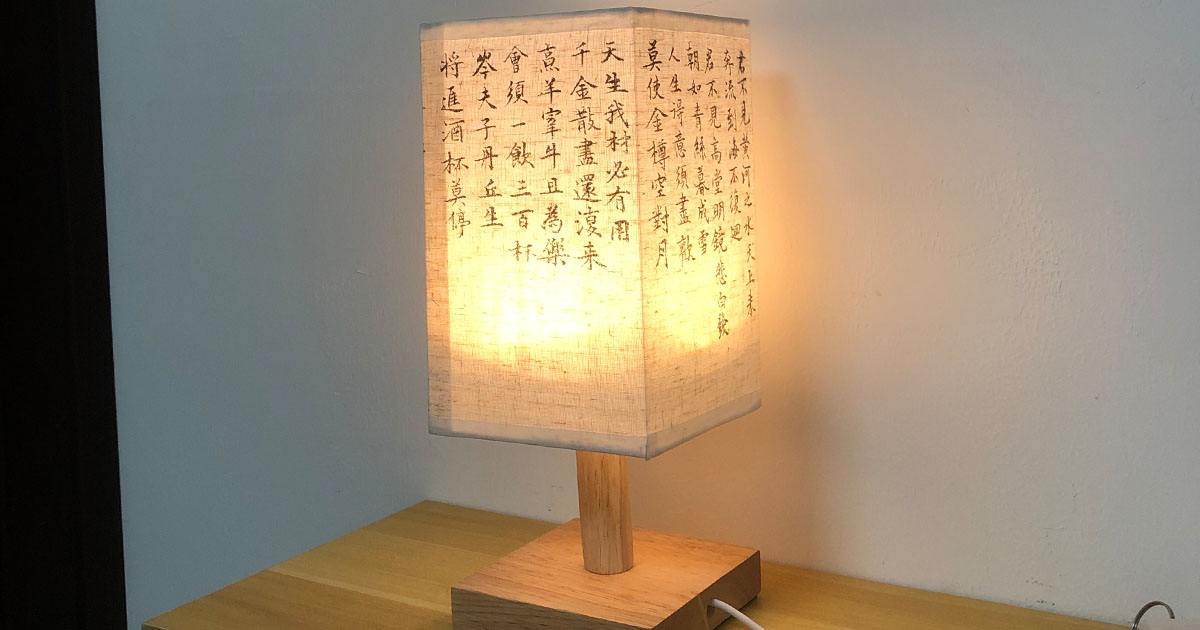
This is one reason I enjoy adapting calligraphy into smaller forms such as bookmarks, digital wallpapers, small art objects, and framed pieces.
A wallpaper can place a character quietly on the screen of a phone or computer.
A bookmark can carry a single word between the pages of a book.
A small framed work can bring the visual rhythm of ink and paper into a living space.
The scale changes, but the essential idea remains: a character can become part of an everyday environment without needing to dominate it.
This is particularly close to the idea behind Golden Ink Arts: Quiet Eastern Art for Modern Living.
I am interested in art that can live with you.
Not necessarily something that demands attention every moment, but something that can be noticed again and again.
From Complete Poems to a Single Character
My calligraphy work moves between two different scales.
Sometimes I write a complete classical Chinese verse.
For example:
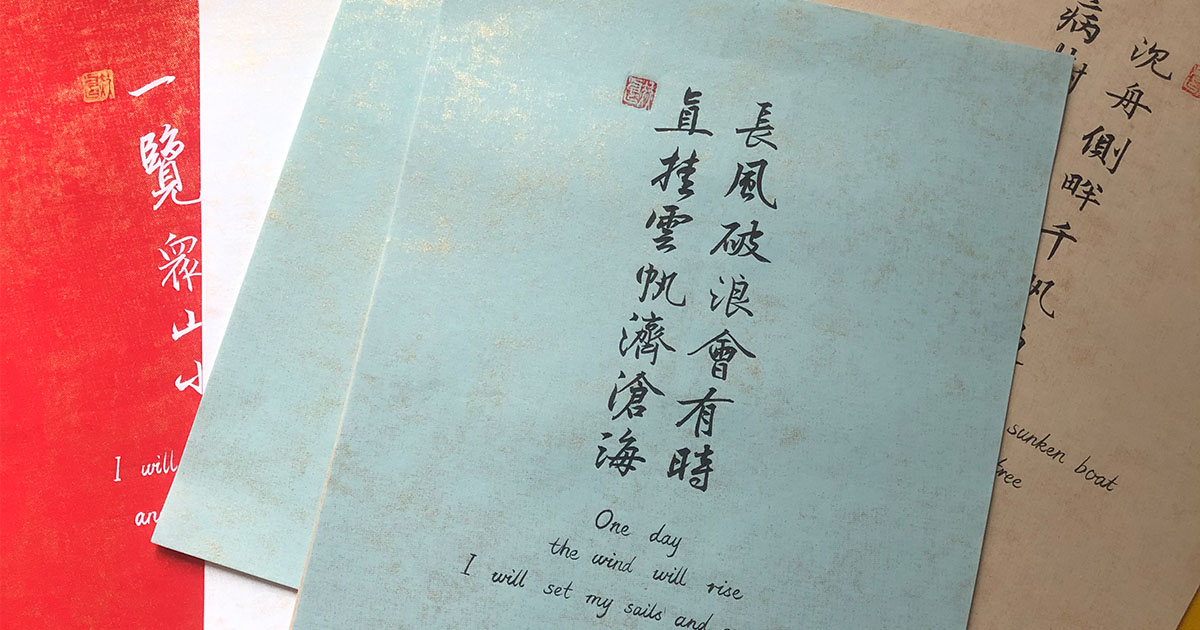
“长风破浪会有时,直挂云帆济沧海。”
The full line carries a complete literary context and speaks naturally to ideas of friendship, encouragement, departure, and a new journey.
At other times, I remove almost everything and leave only one character.
观息静清安
A single character creates a different kind of experience.
There is less information, but more space around it.
The viewer does not have to read a complete poem. The character can simply become a visual presence within the room, on a screen, or on a small personal object.
This is one reason I enjoy working with both complete calligraphy compositions and individual characters. They are not competing forms. They allow the same artistic language to exist at different scales.
Calligraphy, Paper, Ink, and the Space Between
The character itself is only part of the work.
Paper changes the atmosphere of ink.
A cool blue paper can create a quieter, more spacious feeling. Red paper with gold details introduces a different visual intensity. White paper allows red ink and seals to become much more prominent.
The seal adds another layer.
In my works, the seals often include my artist name, Niohe, alongside the Manchu form of the name. They are not simply decorative stamps. They are part of the composition and part of the physical process of making the work.
The final image is therefore a relationship between several elements:
character + brushwork + paper + ink + seal + empty space.
This relationship is something that can easily be lost when calligraphy is treated only as text.
For me, preserving that relationship is important even when the artwork is adapted into a digital wallpaper or a small everyday object.
Chinese Calligraphy in a Modern Life
Chinese calligraphy has a long history, but I do not think it needs to remain visually distant from contemporary life.
A traditional character can sit naturally on a modern desk.
A calligraphy wallpaper can appear on a phone beside photographs, messages, and everyday tools.
A small framed work can exist in a contemporary interior without turning the room into a traditional Chinese-themed space.
The goal is not to recreate an old environment.
It is to allow a traditional visual language to have a quiet place in the present.
This is also why I prefer restraint.
I do not want every work to be crowded with symbols, decoration, or explanations. Sometimes one character, one seal, and a large area of empty paper are enough.
A Character Can Be Read, Seen, or Simply Experienced
There is no single correct way to approach a calligraphy artwork.
If you can read Chinese, you may begin with the meaning.
If you cannot read Chinese, you may first notice the structure, rhythm, color, and movement of the brush.
You may recognize the character later.
Or you may simply enjoy the shape.
All of these ways of looking are valid.
Chinese calligraphy exists at the meeting point of language and visual art. Its meaning can be understood intellectually, while its brushwork can be appreciated visually and physically.
That is what makes a single character so interesting to me.
It can be language, image, gesture, and composition at the same time.
From the Studio to Everyday Life
My calligraphy practice continues to move between the traditional and the contemporary.
I still care about the discipline of the brush, the structure of Chinese characters, traditional papers, ink, seals, and classical texts.
At the same time, I am interested in how these elements can become part of modern daily life.
Some works remain complete compositions.
Others become wallpapers, bookmarks, framed pieces, or small objects.
The form changes, but the starting point remains the same:
a brush, a movement, a character, and a moment of attention.
For me, that is where the quietness of Chinese calligraphy begins.
And perhaps that is why a single character can sometimes be enough.
About Golden Ink Arts
Golden Ink Arts, by Niohe, explores contemporary art inspired by Chinese calligraphy, traditional Chinese painting, contemplative art, and the visual language of Tibetan Buddhist and Thangka traditions.
The work is created with an interest in bringing traditional Eastern visual language into contemporary everyday life — quietly, thoughtfully, and without turning it into a souvenir.
Quiet Eastern Art for Modern Living.